




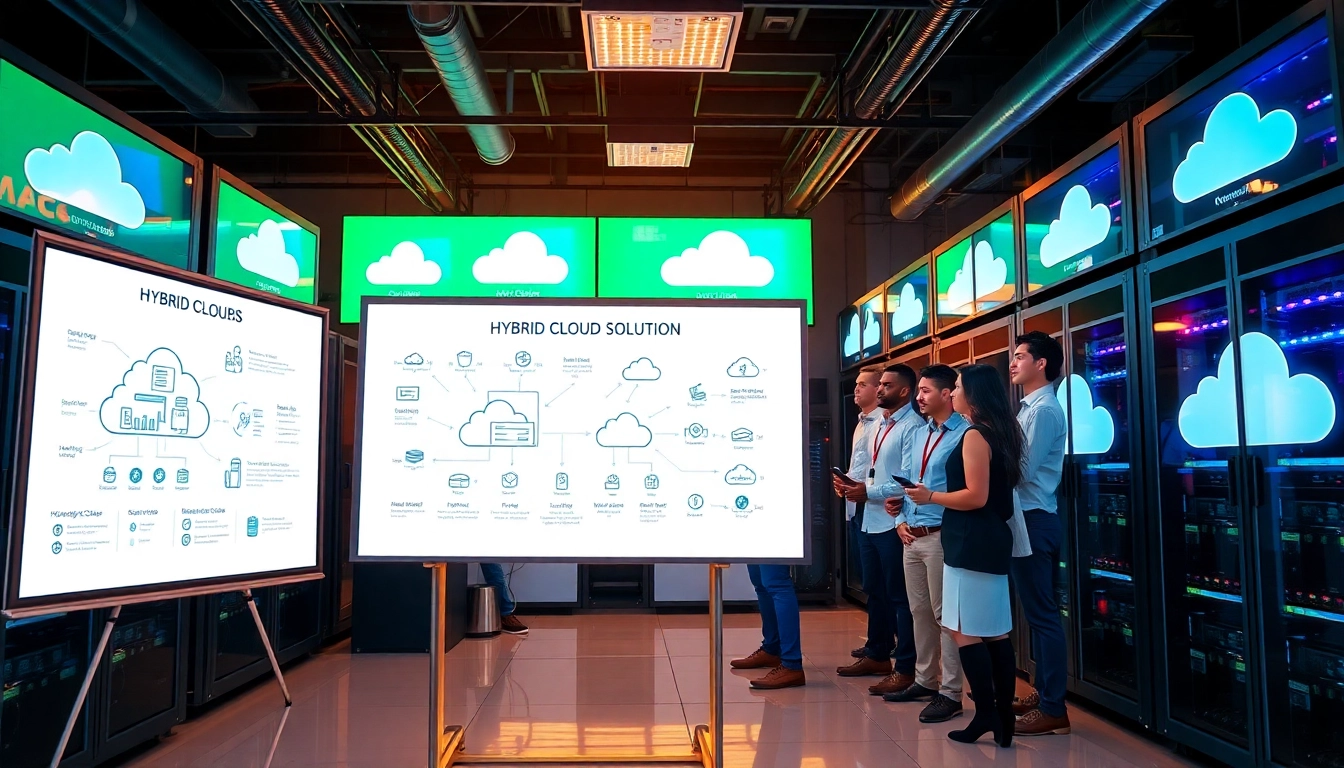
Introduction to Hybrid Cloud Solutions
In the ever-evolving landscape of information technology, businesses face challenges that necessitate flexible and innovative solutions. One significant advancement that has gained traction is the concept of Hybrid Cloud Solutions. This approach combines the robust capabilities of public clouds with the control and security of private clouds, offering organizations a versatile framework to optimize their computing environments. By harnessing the strengths of both cloud types, hybrid solutions facilitate operational agility and a seamless integration of IT resources.
What is Hybrid Cloud Solutions?
A hybrid cloud solution integrates multiple computing resources to create a cohesive infrastructure that encompasses both public and private cloud environments. This model allows organizations to run applications and manage data across various platforms, leveraging the best features of each cloud type. In essence, hybrid cloud solutions empower businesses to choose optimal deployment strategies that cater to their specific needs, regulatory requirements, and performance criteria.
To elucidate further, a hybrid cloud is often characterized by its flexibility, allowing organizations to dynamically scale workloads while maintaining sensitive data within a private cloud. This blend not only enhances efficiency but also supports innovative workloads that require rapid processing power and resource allocation.
Key Components of Hybrid Cloud Solutions
To fully understand hybrid cloud solutions, it is essential to examine their key components:
- Public Cloud: This element provides scalable resources and services accessible over the internet, ideal for handling variable workloads and providing extensive storage capabilities.
- Private Cloud: A private cloud offers enhanced security and control, as it serves a single organization. This setup is suitable for sensitive data and critical applications that necessitate stringent compliance and privacy measures.
- Cloud Management Tools: Effective hybrid cloud solutions require sophisticated management tools that facilitate monitoring, performance optimization, and resource allocation across both public and private environments.
- Networking and Security Protocols: A robust networking framework ensures secure communication between different cloud environments while implementing security measures that safeguard data across platforms.
Benefits of Implementing Hybrid Cloud Solutions
Adopting hybrid cloud solutions brings multiple advantages, including:
- Cost Efficiency: Businesses can optimize expenditures by utilizing public cloud resources for non-sensitive workloads while maintaining critical data in private clouds.
- Scalability: Hybrid solutions allow organizations to seamlessly scale resources in response to fluctuating demands, ensuring they meet user expectations without over-provisioning.
- Enhanced Security: By isolating sensitive data in private clouds, organizations can leverage advanced security protocols, reducing risk exposure to external threats.
- Increased Flexibility: Hybrid solutions enable businesses to migrate workloads between cloud environments as required, supporting diverse operational requirements and evolving business models.
Understanding the Architecture of Hybrid Cloud Solutions
Public vs Private Cloud in Hybrid Cloud Solutions
The architecture of hybrid cloud solutions incorporates both public and private cloud models, each serving unique functions. Public clouds typically provide extensive resources and services to a broad user base, such as Data Backup and Disaster Recovery solutions, while private clouds offer tailored configurations specifically designed for individual organizational needs. The hybrid approach enables organizations to strike a balance between flexibility and control, ensuring security without sacrificing the benefits of a public cloud’s scalability.
Networking and Security in Hybrid Cloud Solutions
A successful hybrid cloud architecture relies on a robust networking framework that facilitates efficient communication between public and private clouds. This can involve the use of Virtual Private Networks (VPNs) or dedicated connections to secure data transit. Security protocols are paramount to protecting sensitive data and workloads. Organizations must implement encryption, identity and access management tools, and threat detection mechanisms to fortify their hybrid environments.
Data Management Techniques in Hybrid Cloud Solutions
Efficient data management is critical in a hybrid cloud setting. Techniques such as data replication, data tiering, and workload optimization play a vital role in ensuring that data is accessible, secure, and well-regulated across different cloud environments. Organizations need a strategic approach for placing data in the appropriate environments based on factors such as performance requirements, regulatory compliance, and user demand.
Common Use Cases for Hybrid Cloud Solutions
Industry Applications of Hybrid Cloud Solutions
Various industries have adopted hybrid cloud solutions to meet specific needs and overcome unique challenges. For instance:
- Healthcare: In the healthcare sector, hybrid cloud solutions enable secure patient data management while allowing for scalability when integrating emerging technologies such as telemedicine and electronic health records.
- Financial Services: Financial institutions leverage hybrid clouds to comply with stringent regulations while benefiting from cost-effective resources for data analytics and customer insights.
- Retail: Retailers utilize hybrid clouds to manage inventory systems, enhance customer experiences via personalized services, and streamline operations across multiple channels.
Case Studies of Successful Hybrid Cloud Solutions
Examining real-world implementations can provide valuable insights into the effectiveness of hybrid cloud solutions. For example, a mid-sized manufacturing company integrated a hybrid cloud strategy to enhance its production process and supply chain management. By utilizing a public cloud for processing large datasets while retaining proprietary algorithms in a private cloud, the organization improved efficiency and gained valuable analytical insights.
Challenges and Opportunities in Hybrid Cloud Solutions
While hybrid cloud solutions offer numerous benefits, there are challenges as well. Some organizations may face difficulties in integrating their existing systems into a hybrid model, leading to data silos or inconsistent performance. Additionally, ensuring compliance with data regulations can become complex within a hybrid environment. However, these challenges present opportunities for innovation, encouraging organizations to enhance their digital strategies to improve collaboration, data accessibility, and security.
Best Practices for Implementing Hybrid Cloud Solutions
Choosing the Right Providers for Hybrid Cloud Solutions
Selecting the right providers is crucial to the success of hybrid cloud implementations. Organizations should evaluate potential providers based on their service offerings, performance track record, compliance capabilities, and support models. Establishing strong partnerships with cloud solution providers can lead to enhanced service levels, seamless integrations, and better resource management in the long run.
Budgeting and Cost Management in Hybrid Cloud Solutions
Effective budgeting is essential when customizing hybrid cloud solutions. Organizations must accurately forecast costs associated with both public and private cloud resources. This involves understanding the pricing models of cloud providers, which can differ significantly. By leveraging tools for cost monitoring and optimization, businesses can implement more efficient budgeting practices and avoid unexpected expenses.
Monitoring and Optimization of Hybrid Cloud Solutions
Monitoring tools are critical to maintaining the performance and efficiency of hybrid cloud solutions. Organizations should utilize metrics and dashboards to track workload performance, resource utilization, and user satisfaction. Regular assessments can reveal opportunities for optimization, allowing organizations to realign their resources and enhance overall efficiency in the hybrid environment.
Future Trends in Hybrid Cloud Solutions
Emerging Technologies Influencing Hybrid Cloud Solutions
The hybrid cloud landscape is rapidly evolving, influenced by cutting-edge technologies such as edge computing, artificial intelligence (AI), and machine learning (ML). These innovations enable organizations to process and analyze data closer to where it is generated, reducing latency and improving real-time decision-making capabilities. Furthermore, AI-driven optimization tools can enhance hybrid cloud management, automating resource allocation and improving operational efficiencies.
Predictions for Hybrid Cloud Solutions in the Coming Years
As hybrid cloud solutions continue to mature, organizations can anticipate greater adoption and refinement of best practices. Predictions indicate a shift towards more automated cloud management systems, enabling businesses to focus on strategic initiatives rather than resource management. The convergence of various technologies will allow organizations to derive deeper insights from their data while fostering innovation across industries.
Strategic Recommendations for Hybrid Cloud Solutions
To thrive in a hybrid cloud environment, organizations should focus on developing a clear strategy that encapsulates scalability, data governance, and compliance. Engaging stakeholders from IT, finance, and compliance teams can lead to better alignment of cloud objectives with overall business goals. Additionally, organizations should foster a culture of continuous learning to keep pace with evolving technologies and industry standards.



More Stories
Top Innovations in Computers and Electronics for 2023
The Definitive Guide to AI Chatbots for Adults: Boost Engagement in 2026
Improving Your SEO Performance: Key Strategies and Insights