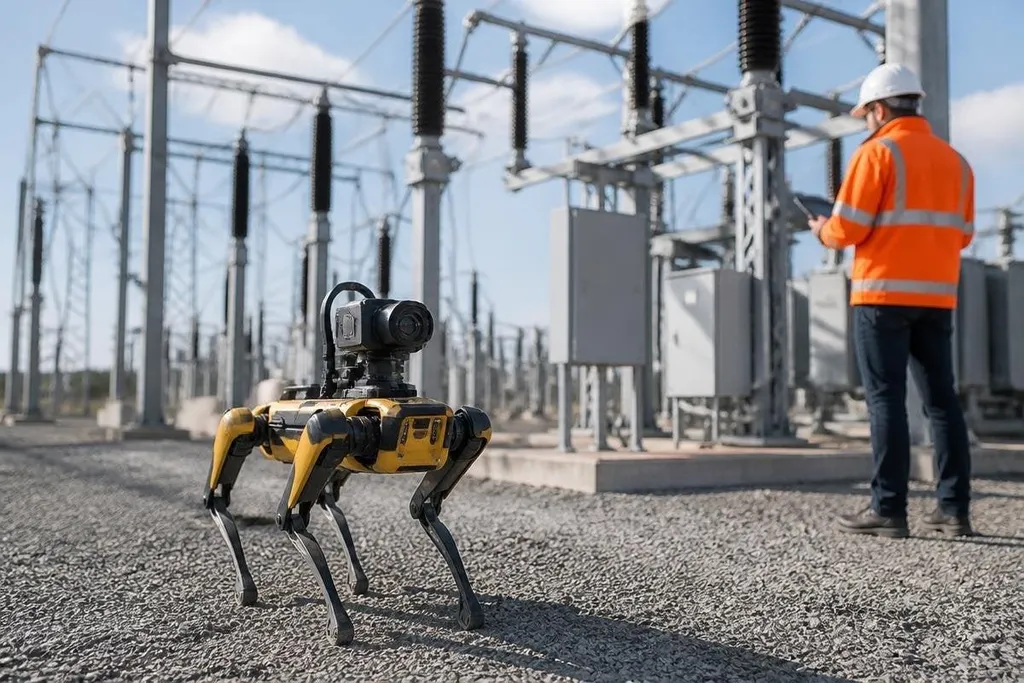
Energy inspection robots must work where people face heat, height, radiation, water, or moving equipment. The hard part is not making a robot move through those places. It is making the robot collect useful evidence and return safely.
This article looks at the machines, sensors, and buying tests that matter when an energy company weighs automation.
Quick read
- Cameras find visible damage, while thermal sensors show heat that the eye misses.
- LiDAR helps a robot map structures, but poor weather and blocked paths can still stop it.
- The best system is the one that turns a sensor reading into a repair decision.
What these robots inspect
Energy sites contain different inspection problems. A ground robot may travel around a substation, check cables, read gauges, and look for oil leaks.
A drone can reach towers, lines, and roofs without sending a technician onto a ladder.
Pipelines bring another set of needs. A robot moving inside a pipe may check corrosion, cracks, or changes in wall thickness. Its size, wheels, power system, and communications link must fit the pipe before any sensor result matters.
Wind turbines and solar sites also need different machines. A drone can inspect blades from the air, while a ground robot can move between solar panels and collect images from repeatable paths. One robot rarely covers the whole site well.
Sensors turn images into evidence
A normal camera gives an operator a visual record. Thermal cameras add heat patterns, which can point to an electrical fault or a damaged component. The thermal image still needs context: sunlight, wind, surface color, and load can change what the sensor sees.
LiDAR measures distance with laser pulses. The robot can use those measurements for simultaneous localization and mapping, known as SLAM. In plain terms, it builds a map while working out where it is inside that map.
Ultrasonic sensors can check some materials for flaws, while gas sensors can warn about leaks. Each sensor has a narrow job. A buyer should ask what condition the sensor can detect, how the reading is stored, and who reviews it.
That last question matters. A folder of images is not a repair plan. The system needs a way to mark an asset, compare new readings with older ones, and send a clear result to the maintenance team.
Autonomy has limits in the field
A planned route may work across a clean test area and struggle at a live site. Cables, puddles, glare, stairs, radio dead zones, and temporary barriers can change the route within minutes.
Remote operation helps when the robot reaches a difficult section. It also adds a person to the task, along with a control link that can fail. A useful system makes the handoff clear: the robot runs routine paths, then an operator takes control when the sensors or map show a problem.
Energy sites can also demand special protection. An IP rating describes resistance to water and dust, but it does not answer every safety question. Buyers may need rules for electrical clearance, explosive gases, heat, radio equipment, and emergency stops.
An IP rating still leaves a buyer asking who tested the robot, where, and under which safety rules. Robot24’s energy robotics reporting can show those details for each machine and task before the next section sets out the tests a serious system must pass.
What a serious buying test should show
A video of a robot finding a fault is a useful start. It does not show how often the system misses faults, how much work an operator must do, or how the data reaches an existing maintenance system.
I'd reject a purchase based on a polished demo alone. Ask for a site trial with known inspection points, repeat the route under normal site conditions, and compare the robot's findings with a qualified human inspection.
The result should include false alarms and missed faults. A robot that flags every hot connector may keep a team busy without helping them decide what to repair first.
A practical buying checklist
Before signing a contract, ask the supplier to show:
- The target fault: Which defects can the system detect, and what evidence supports that claim?
- The operating map: Can it work around stairs, wet ground, metal structures, poor light, and blocked paths?
- The human handoff: What happens when the robot loses its map, signal, or route?
- The data record: Does each image or reading carry an asset name, location, time, and inspection result?
- The site burden: How much charging, cleaning, calibration, and operator time does each inspection need?
- The safety case: Which site rules, clearances, and emergency actions apply to the machine?
Energy inspection robots will earn wider use through repeatable records, not dramatic demonstrations. The next useful proof is simple: can one system inspect the same assets over several visits and help a maintenance team find a real fault sooner?